Women in Ag: Setting the Standard for Safety, Dr. Randi Cran
At Wayne-Sanderson Farms, a culture of safety touches every part of our business—from animal care to food safety to employee health. Strong safety cultures don’t happen by chance; they are built by leaders who are intentional in their efforts to protect people and support teams. Across our operations, women play a vital role in shaping what that looks like every day.
The next feature in our Women in Ag series is Dr. Randi Cran, Corporate Veterinarian.
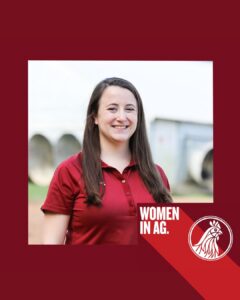
Growing up, Randi was no stranger to the poultry industry, having been exposed to it through her father’s career from an early age. That early exposure ultimately led to an opportunity that would help shape her future. When she started college as an English major, Randi quickly realized it wasn’t the right fit. Her father scheduled a visit for her to shadow Dr. Sue Anne Hubbard and Dr. Kelli Jones at the Poultry Research and Diagnostic Laboratory in Pearl, Mississippi—and Randi loved the experience. “Drs. Hubbard and Jones were so excited about their work that it was contagious,” Randi said.
Over the next few years, Randi continued to explore several roles within the industry, but it quickly became clear where her passion was leading. After shadowing a few more positions, she ultimately discovered that she wanted to become a veterinarian. Today, Randi serves as a Corporate Veterinarian, where she plays a critical role in supporting animal health across Wayne-Sanderson Farms’ four Mississippi complexes. She is responsible for overseeing vaccination programs, as well as biosecurity and animal welfare efforts, which are key components in maintaining flock health and the integrity of operations.
Wayne-Sanderson Farms’ veterinary team consists of five veterinarians located from Texas to North Carolina, working together to protect the health of flocks and share knowledge across the system. “To monitor broiler health, we have routine sessions looking at respiratory and intestinal health across all bird ages,” she shared. “I also work directly with the managers and service technicians at my assigned complexes to prevent, investigate, and treat illness on a farm-by-farm basis. It is a wonderful feeling to know I have the entire veterinary team and their combined knowledge just a phone call away.”
Strong animal health programs also play a key role in the company’s broader mission of producing safe, high-quality food. “A huge part of food safety is food security,” Randi explained. “Having strong health programs allows us to have a steady line of supply from the breeder stock all the way to birds heading into the plant.”
As veterinary science continues to evolve, Randi has seen how new tools and technologies are helping improve both animal welfare and operational efficiency. “The company recently purchased BinSentry, a program that allows us to more accurately assess on-farm feed inventories for every single feed bin in the company,” she said. “This takes a lot of guesswork, or relying on grower estimation, to keep our flocks from running out of feed. This also improves the safety of company employees who no longer have to climb feed bins to ensure accurate estimations.”
Throughout her career, Randi has learned that strong leadership is rooted in honesty, curiosity, and a willingness to learn. “‘I don’t know’ and ‘I messed up’ are two of the most powerful statements someone can make,” she said. “Being willing to admit when you don’t understand something will gain a lot of respect. Also, I have learned that wrong decisions are rarely made due to lack of knowledge and more likely made due to incomplete information concerning a situation. Always ask a lot of questions.”
Reflecting on her journey, Randi encourages others, especially women, to consider the opportunities available within agriculture and animal health. “Working in agriculture is one of the most satisfying jobs you can have,” she said. “I list it alongside healthcare and teaching when I think of careers where the fruits of your labor can be easily seen and easily connected to the people you are serving. It is a great career, and I highly encourage anyone considering veterinary medicine to take a close look at agriculture.”
Randi credits much of her path to the mentors who influenced her along the way, including the veterinarians she first shadowed, leaders within the industry, and her father, whose career and guidance have had a lasting impact. “Some of my father’s best advice to me has always been to make the best decision you can with the information you have—and I rely on that mantra frequently,” she shared.
Looking ahead, Randi is focused on continuing to advance animal health practices and supporting the future of poultry production. “I believe that pullet rearing is going to be the greatest area of opportunity and advancement over the next several years,” she said. “I hope to stay abreast of the changes and not just help bring the latest trend to Wayne-Sanderson Farms, but help to lead us to the best practices for our birds and our industry!”